
On-hook towing
Coverage for the vehicle on your hook, and where it stops and garagekeepers begins.
Short answer
On-hook towing coverage generally pays for damage to a customer's vehicle while it is hooked up to your wrecker and being towed. It is separate from your liability coverage, which pays for harm your truck does to other people, and from garagekeepers, which covers vehicles while they are in your care at your yard or shop. Policies differ on what counts as "on the hook," so read the definition.
How does on-hook towing coverage work for a towing company?
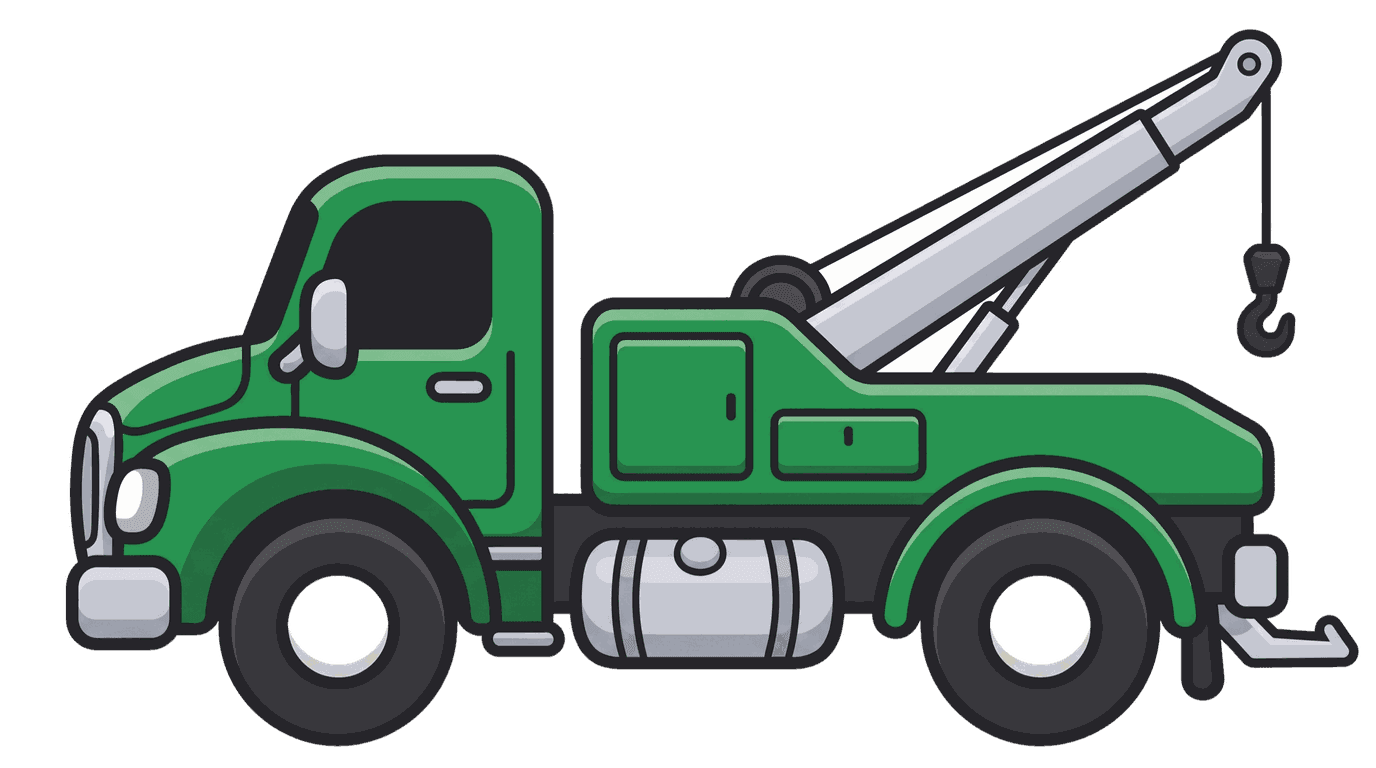
A tow company takes on other people's vehicles every day. Once a car or truck is attached to your wrecker, you are responsible for it. If it is damaged during the tow, in loading, or in transit, the owner can hold you responsible. On-hook towing coverage is the policy that generally responds to that damage, up to the policy limit, less your deductible.
Where on-hook sits among a tow company's coverages:
- Liability for your wrecker (the harm it does to others on the road): primary auto liability.
- The vehicle on your hook: on-hook towing.
- The vehicle in your yard or shop: garagekeepers liability.
- Your own wrecker: physical damage.
Points that decide how it works:
- What "on the hook" means. Some policies cover from the moment of hookup to the moment of release. Others have narrower or broader definitions, including loading and unloading.
- Limit per tow. Heavy-duty tows involve vehicles with a higher value than light-duty ones. A limit that fits light-duty work may fall short on a loaded commercial vehicle.
- Covered perils. Collision and overturn, and sometimes theft, fire, and other causes.
- Cargo and contents. Freight inside a towed vehicle is often not covered by the same limit, or at all.
- Which wreckers are covered. Coverage typically applies to the units listed on the policy.
What does on-hook towing cover, and what doesn't it?
Policies vary. Read your declarations, definitions, and exclusions. In general:
Often covered
- Physical damage to a customer's vehicle while it is hooked up and in tow, up to the limit
- Damage during loading or unloading, under many policies, depending on the definition
- Covered causes of loss as the policy defines them
Often not covered, or covered only with conditions
- The vehicle once it is off the hook and in your care at the yard. That is garagekeepers liability.
- Cargo or contents in the towed vehicle, under many policies
- Damage your wrecker causes to other vehicles or people. That is primary auto liability.
- Your own wrecker. That is physical damage.
- Pre-existing damage to the towed vehicle
- Unlisted wreckers and units the policy doesn't describe
- Towing outside the area or type of work the policy describes, such as a different radius or load class
- Wear and tear, and mechanical failure of the towed vehicle
Pre-existing damage is the most common dispute. Photograph the vehicle at hookup and note its condition on the work order.
What affects the cost of on-hook towing coverage?
We don't publish prices. Cost is set by insurers and the licensed agents you work with. The factors that generally move it:
- Limit per tow. The most the policy pays for one towed vehicle
- Type of towing. Light-duty, medium-duty, or heavy-duty, and the values involved
- Number of wreckers and drivers
- Radius. Local calls, or long-distance and interstate tows
- Type of work. Roadside, accident recovery, repossession, or contract work such as motor club or police rotation
- Deductible
- Claims history and experience
- Safety practices. Loading procedures and documenting condition before the tow
Who typically needs on-hook towing coverage?
- Towing and repair: The main audience. Any company that tows vehicles for others.
- Small fleets: A fleet that has its own wrecker for breakdowns may still want to ask. A tow of your own unit is generally not a customer's vehicle.
- New authority: If you are adding towing as a service, ask how your current policies treat vehicles on your hook.
- Couriers: Not a typical fit. Mentioned only because box-truck operators who tow trailers should read their policy's definitions.
Heavy-duty and light-duty work are different exposures. Tell your insurance agent which you do.
What do agencies and insurers usually ask for?
- A description of your towing work: light, medium, heavy; roadside, recovery, repossession, or contract
- A schedule of your wreckers and other units
- Your radius and the states you tow in
- Your largest typical tow value
- Your work order or condition-report process
- Any contract that requires a limit or additional insured, such as a motor club or municipal contract
- Loss history
Before you accept a policy, ask for the definition of "on the hook" in writing and compare the limit to the vehicles you actually tow.
Frequently asked questions
What is the difference between on-hook and garagekeepers?
On-hook generally covers a customer's vehicle while it is hooked to your wrecker and being towed. Garagekeepers generally covers customers' vehicles while they are in your care at your shop or yard. Policies define the boundary differently, so read both.
Does my wrecker's liability policy cover the car I'm towing?
Often not. Liability coverage generally pays for harm to other people and their property, and many policies exclude property in the insured's care, custody, or control. A towed vehicle is in your care. Read the exclusions.
Does on-hook coverage cover cargo inside a towed truck?
Often not, or only up to a lower limit. Ask how your policy treats contents and cargo.
How do I protect myself from a damage dispute?
Photograph the vehicle at hookup and at drop-off, note existing damage on the work order, and keep records. That helps with any insurer or customer.
Do I need it if I only do roadside work?
If you take a vehicle onto your hook, you are responsible for it. Coverage needs depend on your contracts and your risks. Ask your insurance agent to describe your work.
Does BreadRoute sell on-hook towing coverage?
No. BreadRoute is not a licensed insurance agency. If you start an insurance request, it goes to licensed partners, who handle any coverage options.
Sources
- 49 CFR 387.5, Definitions (public liability), Electronic Code of Federal Regulations, 2026
Last reviewed: