
Bobtail and non-trucking liability
Two coverages with similar names for a tractor without a trailer, and the lease question that decides which one you're looking at.
Short answer
Bobtail and non-trucking liability are two different liability coverages for an owner-operator's tractor when it is not hauling freight for the carrier it leases to. Bobtail generally applies when you drive the tractor without a trailer, and non-trucking liability generally applies when the tractor is not under dispatch. Both are mainly for owner-operators leased onto a carrier. If you operate under your own authority, you need primary auto liability instead, and you can't count on these to stand in for it.
How do bobtail and non-trucking liability work for an owner-operator?
These two coverages come up when you own a tractor and lease it, with your driving, to another carrier. When you haul under that carrier's authority and dispatch, that carrier is the one responsible for the public liability coverage the federal rules require. Federal leasing rules say the lease between an authorized carrier and the equipment owner must clearly specify the carrier's legal obligation to maintain insurance for the protection of the public, and must specify who provides any other coverage for the equipment, "such as bobtail insurance." Federal rules also require the carrier-lessee to have exclusive possession, control, and use of the equipment for the duration of the lease.
That leaves gaps for the times you are driving the tractor but not hauling a load for the carrier. The two coverages address different gaps, and they are not interchangeable. In general terms:
| Bobtail | Non-trucking liability | |
|---|---|---|
| The question it answers | Are you driving the tractor without a trailer? | Is the tractor being used outside the carrier's dispatch? |
| Typical example | Driving to pick up a trailer, or returning from a drop, without a trailer attached | Driving home, personal errands, or between dispatches |
| Who it protects | Third parties you injure or whose property you damage | Same |
| Common confusion | Often assumed to cover any non-load driving | Often assumed to cover any tractor without a trailer |
How the terms are defined, and which situations count, varies by insurer. Some policies combine the two under one name, some separate them, and some leave gaps between them. Read the definitions.
Leased on versus under your own authority. This is the distinction that matters most.
- Leased on to a carrier. The carrier's policy generally responds while you are hauling under its authority and dispatch. Bobtail and non-trucking liability fill the gaps around that use, and the lease usually says which one the carrier requires you to have.
- Under your own authority. You are the motor carrier. You need primary auto liability that meets the federal and contract requirements for the work you do. Bobtail or non-trucking liability is not a substitute, and a policy written for a leased-on owner-operator may not respond the way a primary policy does when you run on your own authority.
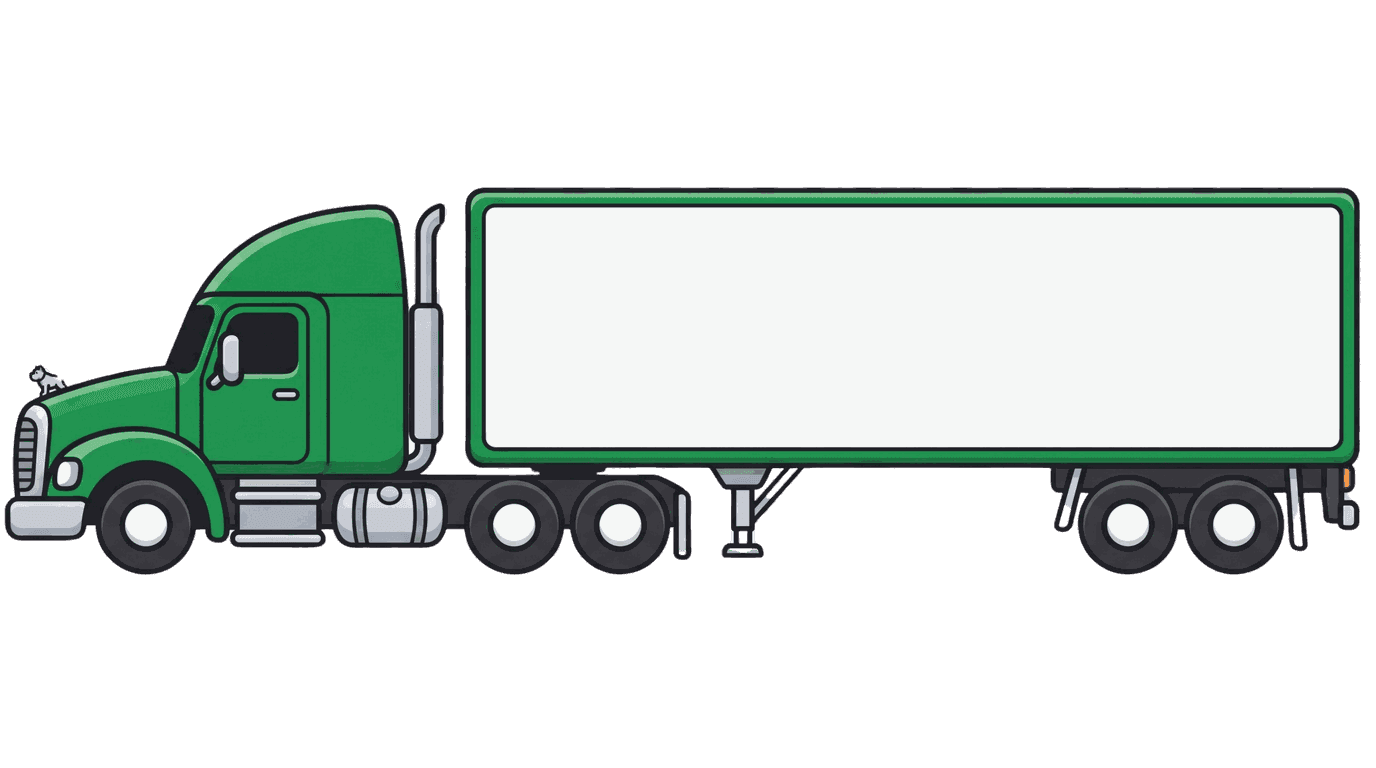
What do bobtail and non-trucking liability cover, and what don't they?
Policies vary. Read your declarations, definitions, and exclusions. In general:
Often covered
- Bodily injury and property damage you cause to others while using the tractor in the situation the policy describes, up to its limit
- Legal defense for covered claims, under many policies
Often not covered
- Hauling under dispatch. When you are hauling or under dispatch for the carrier, the carrier's primary liability is generally what responds. A bobtail or non-trucking policy may exclude that use.
- Use under your own authority. Often excluded or not what the policy was written for.
- Damage to your own tractor. That is physical damage.
- Freight. That is motor truck cargo.
- Injuries to you. That is occupational accident or another personal coverage, not liability.
- Business use of any kind, under many non-trucking liability policies. The policy defines what counts as business use.
Assuming a coverage applies in a situation where it doesn't is how owner-operators end up with a gap at the worst time. Ask your insurance agent to walk through specific situations, such as driving to pick up a trailer or returning from a delivery, and ask for the answer in terms of the policy's wording.
What affects the cost of bobtail or non-trucking liability?
We don't publish prices. Cost is set by insurers and the licensed agents you work with. The factors that generally move it:
- Which coverage you need. Bobtail, non-trucking, or a combination, and how the policy defines each
- Limits. The liability limit your lease or carrier requires
- Your driving record and years of experience
- The tractor. Age, type, and where it's kept
- How you use it between dispatches. Personal use and travel distance
- Your lease. Requirements the carrier puts on limits, deductibles, and named insureds
- Claims history
Coverage needs guide
Open the full toolCoverages
Example only
Required by federal rule
Where a federal regulation says so for your answers. Read the rule, and ask your agent how it fits your vehicles.
Primary auto liability
Federal rules require a for-hire carrier of property in interstate commerce to have minimum financial responsibility in effect before it operates: $750,000 for nonhazardous property in a vehicle with a gross vehicle weight rating (GVWR) of 10,001 pounds or more.
Commonly required by contracts
Federal rules do not set these for most operations. Shippers, brokers, lessors, lenders, and the carriers you lease to often do. Your own contract controls.
Motor truck cargo
The federal liability minimums cover harm to the public, not the load, so shippers and brokers set cargo limits in their contracts.
Physical damage
Lenders and lessors commonly require it on a financed or leased unit. The federal rules we cite cover liability to the public, not your own equipment.
Trailer interchange
Comes up if you pull trailers you do not own under a written interchange agreement. The agreement often sets the coverage you are required to carry.
Commercial umbrella
Contracts commonly set liability limits above a base policy, and an umbrella is one way to close the gap. Whether one can sit over trucking auto liability varies by insurer.
Worth asking your agent about
We found no rule we can cite that makes these a requirement for your answers. They come up for operations like yours.
Occupational accident
A private policy, mainly for independent owner-operators who are not covered by workers' compensation. Some carriers require it of owner-operators they lease. No law we cite requires it.
General liability
Covers injury or damage tied to your premises or operations, not your trucks on the road. Some shippers, brokers, and landlords ask for a certificate.
Workers' compensation
Set largely by state law. Which employers must carry it and who counts as an employee vary by state. If you have employees, ask your state workers' compensation agency.
Not a requirements list. Confirm with a licensed agent.
Example answers, not your operation.
Who typically needs bobtail or non-trucking liability?
- Owner-operators leased onto a carrier: This is the main audience. Read the lease first, since it should say who carries what.
- New authority: If you plan to get your own authority later, remember these coverages don't carry over as primary liability.
- OTR and local haul: Time between dispatches and miles without a trailer both add situations to ask about.
- Small fleets: If you lease some of your units onto other carriers, each lease may call for its own coverage.
What do agencies and insurers usually ask for?
- A copy of your lease or leasing agreement, or the section on insurance
- The carrier's name and what it requires from you in writing
- Your tractor details: year, make, model, VIN
- Your driver license and driving history
- How you use the tractor outside dispatch
- Loss history, if any
Before you accept a policy, ask which situations the policy covers in plain words, and compare the answer to the insurance section of your lease.
Frequently asked questions
Are bobtail and non-trucking liability the same thing?
No. They are different coverages with different definitions. Bobtail generally concerns driving the tractor without a trailer. Non-trucking liability generally concerns use outside the carrier's dispatch. Some insurers combine or define them differently, so read the wording.
Do I need either one if I run under my own authority?
Under your own authority you are the motor carrier, so primary auto liability is the coverage to look at. These two are generally written for leased-on owner-operators and are not a substitute.
Who decides whether I need it, my carrier or the law?
Your lease. Federal leasing rules require the lease to say who provides coverage other than the carrier's public liability insurance, and they name bobtail insurance as an example.
Does bobtail coverage protect my tractor?
No. These are liability coverages, which protect other people. Damage to your tractor is physical damage.
Do these cover me if I am hurt?
No. They cover your liability to others. For your own injuries, see occupational accident.
Does BreadRoute sell bobtail or non-trucking coverage?
No. BreadRoute is not a licensed insurance agency. If you start an insurance request, it goes to licensed partners, who handle any coverage options.
Sources
- 49 CFR 376.12, Written lease requirements, Electronic Code of Federal Regulations, 2026
Last reviewed: