
How Much Does Invoice Factoring Cost?
How Much Does Invoice Factoring Cost?
If you're considering invoice factoring to close cash flow gaps, one of the first questions you'll have is: what will it actually cost?
The short answer is that factoring rates typically range from 1% to 5% per month, depending on several variables. But the total cost involves more than just the factor rate. Advance rates, fee structures, and your customers' payment behavior all play a role in what you'll ultimately pay.
If you're unfamiliar with how the process works, start with our guide on what invoice factoring is and how it works. This article focuses specifically on breaking down the costs so you can make an informed decision.
How Invoice Factoring Pricing Works
Invoice factoring pricing has two core components: the advance rate and the factor fee.
Advance rate: This is the percentage of the invoice value the factoring company pays you upfront when you sell the invoice. Advance rates typically range from 70% to 95%, depending on your industry, invoice size, and the creditworthiness of your customers.
Factor fee: This is the cost the factoring company charges for the service. It's usually expressed as a percentage of the total invoice value, charged per 30-day period (or a portion of it).
The reserve: The difference between the advance rate and 100% of the invoice value is held in reserve. Once your customer pays the invoice in full, the factoring company releases the reserve to you, minus the factor fee and any other applicable charges.
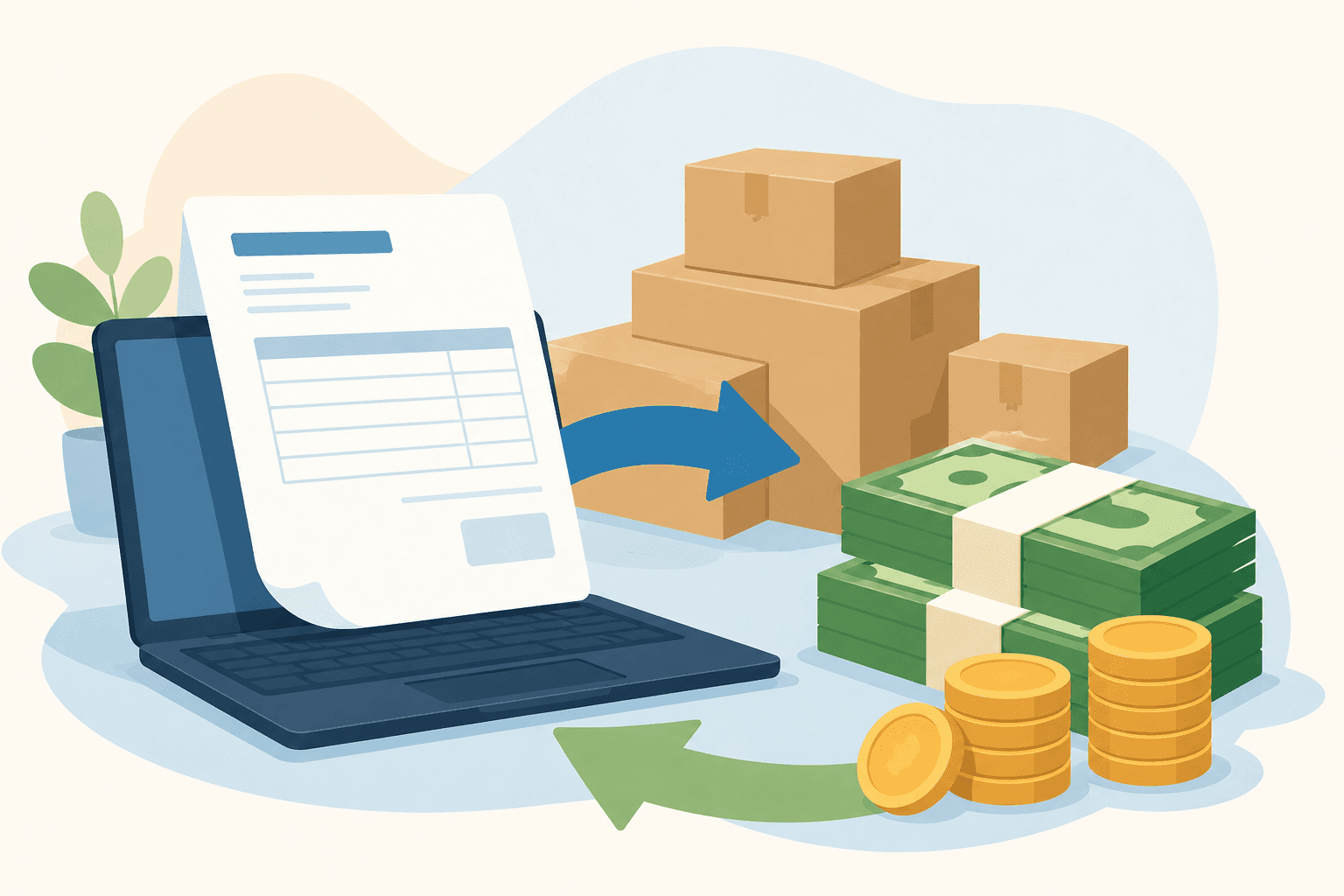
Here's a simplified view of the flow:
- You submit an invoice to the factoring company.
- You receive an advance (e.g., 85% of the invoice value).
- Your customer pays the invoice on their normal terms.
- The factoring company sends you the remaining 15%, minus their fees.
Typical Invoice Factoring Rates
Factoring rates vary by provider and agreement type. Here are the two most common pricing models:
Flat rate factoring: A fixed percentage is charged for each billing period, regardless of how quickly the customer pays. For example, a flat rate of 3% per 30 days means you pay 3% of the invoice value whether the customer pays on day 10 or day 30.
Variable or tiered rate factoring: The rate increases the longer the invoice goes unpaid. A common structure might look like this:
- 1% for the first 30 days
- An additional 0.5% for each subsequent 15- or 30-day period
This structure rewards faster-paying customers and penalizes slow ones.
Simple example: Say you factor a $10,000 invoice with a flat 3% factor rate and a 30-day payment term.
- Factor fee: $10,000 × 3% = **$
- If your advance rate is 85%, you receive $8,500 upfront.
- When the customer pays, you receive the remaining $1,500 minus the $
- Total received: $8,500 + $
- Total cost of factoring: $300
Additional Fees to Watch For
The factor rate is only part of the story. Many factoring companies charge additional fees that can increase your total cost. Common ones include:
- Application or setup fees: One-time charges to open your account.
- ACH or wire transfer fees: Charges for each funds transfer.
- Monthly minimum volume fees: Penalties if you don't factor enough invoices per month.
- Early termination fees: Costs for ending your contract before the agreed term.
- Credit check fees: Charges for running credit checks on your customers.
- Invoice processing or service fees: Per-invoice administrative charges.
Before signing any agreement, ask the factoring company for a complete list of all fees. Read the contract carefully. The factor rate might look competitive, but ancillary fees can add up quickly.
Factor Rate vs. APR: Understanding the True Cost
Factor rates and APR are not the same thing. A factor rate is expressed as a simple percentage per period, while APR accounts for the annualized cost of financing, including compounding and fees.
This distinction matters because a seemingly small monthly factor fee can translate to a significant annualized cost. For example:
- A 3% factor fee on a 30-day invoice, repeated monthly, works out to roughly 36% on an annualized basis.
- If your customers pay slowly and you're on a tiered rate, the effective annual cost can climb even higher.
For a deeper comparison, read our breakdown of APR vs. factor rate.
That said, factoring is a short-term financing tool. Most businesses don't factor the same invoice for an entire year. Comparing factoring costs on an annualized basis is useful for understanding the relative expense, but it doesn't always reflect how the product is used in practice.
What Affects Your Factoring Costs
Several variables influence the rate and fees a factoring company will offer you:
- Invoice volume and dollar amount: Higher volumes often qualify for lower rates because the factoring company earns more in total fees.
- Customer creditworthiness: Factoring companies evaluate your customers' ability to pay, not yours. Invoices from financially stable customers are less risky and may receive better rates.
- Industry risk: Some industries, like trucking and construction, have established factoring markets. Others may be viewed as higher risk.
- Average payment terms: Net-30 invoices cost less to factor than net-60 or net-90 invoices because the factoring company's money is tied up for a shorter period.
- Recourse vs. non-recourse factoring: The type of agreement you choose affects pricing (more on this below).
- Relationship length: Some factoring companies offer better rates to long-term clients with a track record of submitting quality invoices.
Recourse vs. Non-Recourse Factoring Costs
With recourse factoring, you're responsible for buying back the invoice if your customer doesn't pay. Because the factoring company carries less risk, recourse factoring typically comes with lower rates.
With non-recourse factoring, the factoring company absorbs the loss if your customer doesn't pay (usually limited to specific situations like customer bankruptcy). This added risk protection costs more, often resulting in higher factor fees.
Most small business factoring agreements are recourse-based. If non-recourse protection is important to you, expect to pay a premium for it.
Invoice Factoring Cost Example
Let's walk through a more detailed example.
Scenario: You have a $50,000 invoice with net-30 payment terms. The factoring company offers a 90% advance rate and a 2.5% factor fee per 30-day period.
| Component | Calculation | Amount |
|---|---|---|
| Invoice value | $50,000 | |
| Advance (90%) | $50,000 × 90% | $45,000 |
| Reserve held | $50,000 × 10% | $5,000 |
| Factor fee (2.5%) | $50,000 × 2.5% | $1,250 |
| Reserve released after payment | $3,750 | |
| Total received | $48,750 | |
| Total cost | $1,250 |
In this example, you receive $45,000 immediately and $
How Factoring Costs Compare to Other Financing Options
Invoice factoring is one of several ways to access working capital. Here's how the cost structure compares to a few alternatives:
| Financing Option | Typical Cost Structure | How It Works |
|---|---|---|
| Invoice factoring | 1%–5% factor fee per month | Sell invoices to a third party for immediate cash |
| Business line of credit | Interest on drawn amount (varies) | Draw funds as needed up to a credit limit |
| Accounts receivable financing | Interest rate on borrowed amount | Borrow against invoices as collateral (you retain ownership) |
| Merchant cash advance | Factor rate applied to total advance | Receive a lump sum repaid via daily revenue splits |
Each option has different qualification requirements, repayment structures, and total costs. Factoring can be easier to qualify for because approval depends on your customers' credit, not your own. But it may carry a higher effective cost than a traditional line of credit for businesses that qualify for one.
For a side-by-side comparison, see our article on invoice factoring vs. a line of credit.
How to Reduce Your Invoice Factoring Costs
You have some control over what you'll pay. Here are practical ways to keep costs down:
- Factor higher volumes. Many factoring companies offer volume discounts. If you consistently factor a large dollar amount, you may qualify for lower rates.
- Choose customers with strong credit. Since the factoring company evaluates your customers, submitting invoices from creditworthy clients can help you secure better pricing.
- Negotiate shorter payment terms. If your customers can pay in 15 or 20 days instead of 30, your factor fees drop on tiered pricing models.
- Compare multiple factoring companies. Rates and fee structures vary widely. Using a marketplace to compare options can help you find a more competitive deal.
- Avoid unnecessary add-on fees. Ask about every fee before you sign. Some charges are negotiable.
- Read the full contract. Pay close attention to minimum volume requirements, termination clauses, and auto-renewal terms.
For broader guidance on evaluating financing providers, read our guide on how to choose a business lender.
Is Invoice Factoring Worth the Cost?
The answer depends on your situation.
Factoring can be a practical tool when cash flow gaps threaten payroll, supplier payments, or growth opportunities. Getting paid on a $50,000 invoice today instead of waiting 60 days can make the difference between taking on a new project or turning it down. In industries like trucking and construction, where long payment cycles are standard, factoring is a common part of cash flow management for small businesses.
On the other hand, factoring may not be the right fit if your profit margins are thin and the factor fee eats into your earnings significantly. Small invoices may also not justify the cost, especially if there are per-invoice processing fees.
Weigh the cost of factoring against the cost of not having that cash available. If waiting for payment means missing opportunities, paying penalties, or struggling to cover operating expenses, factoring may pay for itself.
Compare Factoring Options Through BreadRoute
BreadRoute is a financing marketplace where small business owners can compare invoice factoring companies and other accounts receivable solutions for cash flow. We connect you with multiple providers so you can review rates, terms, and fee structures side by side.
We are not a lender or factoring company. We help you find the right fit for your business.
Ready to explore your options? Apply for Business Financing to get started.
This article provides general information and should not be considered financial or insurance advice. Factoring rates, fees, and terms vary by provider and individual circumstances. All rate ranges cited are typical ranges, not guarantees.
Frequently Asked Questions
Factoring companies typically charge between 1% and 5% of the invoice value per month. The exact rate depends on factors like your invoice volume, your customers' creditworthiness, and the payment terms on your invoices. Additional fees for setup, processing, or wire transfers may also apply.
A typical factor rate falls between 1% and 5% per 30-day period. Many factoring companies offer rates in the 2% to 3% range for businesses with strong customer credit, consistent volume, and standard net-30 payment terms. Rates may be higher for longer payment cycles or higher-risk industries.
Some factoring agreements include fees beyond the factor rate, such as application fees, monthly minimum volume penalties, wire transfer charges, and early termination fees. These are not always prominently disclosed. Always request a complete fee schedule and read the contract thoroughly before signing.
The advance rate determines how much cash you receive upfront, but it does not directly change the factor fee. A lower advance rate means more of your money is held in reserve until the customer pays. The factor fee is still calculated on the full invoice value, so a lower advance rate means you wait longer for a larger portion of your funds.
In many cases, yes. A business line of credit typically carries lower annualized interest rates than the effective cost of factoring. However, lines of credit often require stronger credit scores and longer business histories to qualify. Factoring may be more accessible for newer businesses or those with limited credit, even if the cost is higher.
Your personal or business credit score is less important in factoring than in traditional lending. Factoring companies primarily evaluate the creditworthiness of your customers, since those are the parties who will pay the invoices. That said, some factoring companies may review your credit as part of their underwriting process.
Recourse factoring is typically less expensive because you agree to buy back any invoices your customers fail to pay. Non-recourse factoring costs more because the factoring company assumes the risk of non-payment, usually limited to specific scenarios like customer insolvency. The rate difference between the two can range from 0.5% to 2% or more.