
SBA 504 vs 7(a): Which Loan Is Right for You?
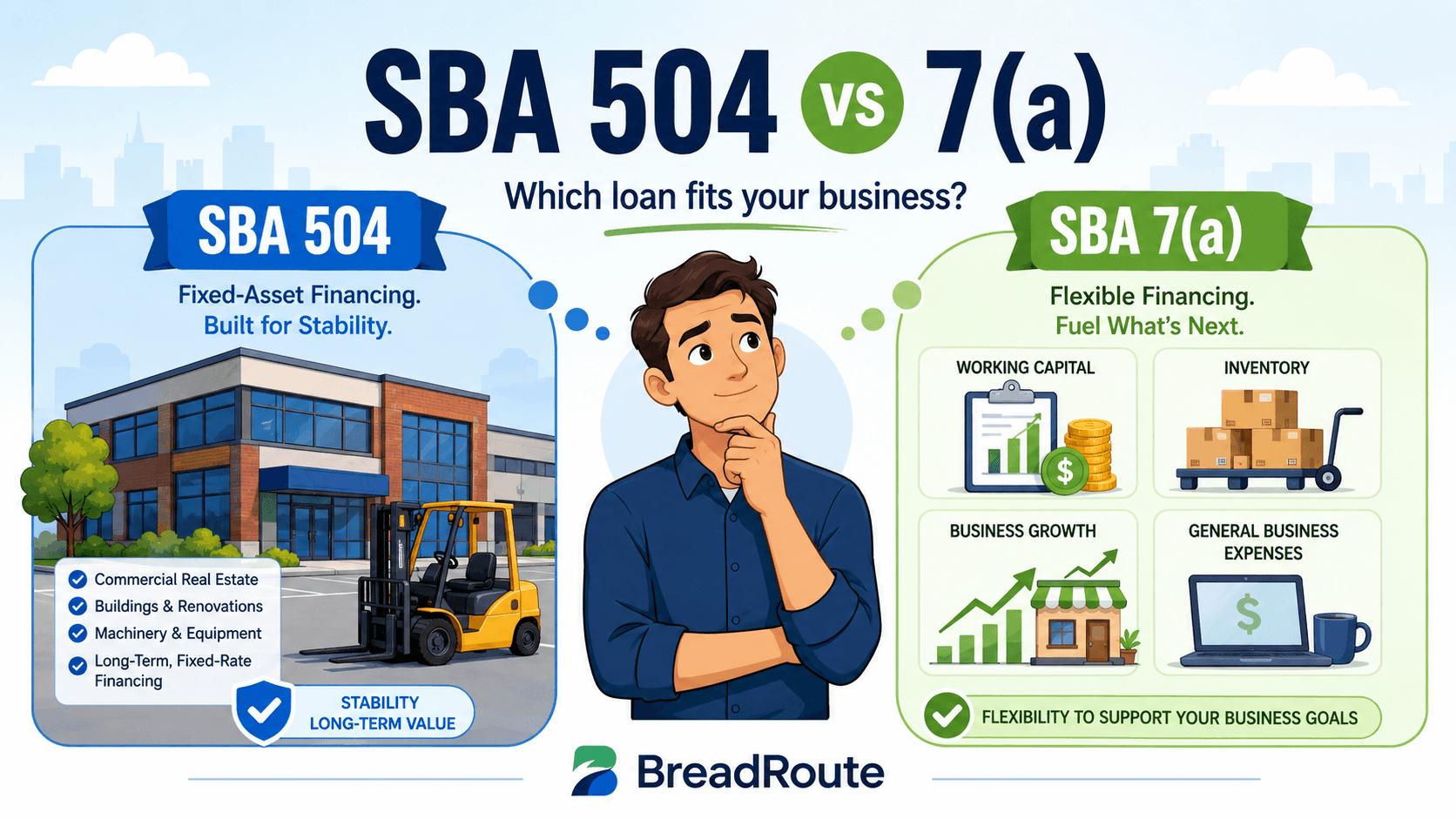
SBA 504 vs 7(a): Which Loan Is Right for You?
If you're exploring SBA financing, you've likely come across two flagship programs: the SBA 504 loan and the SBA 7(a) loan. Both are backed by the U.S. Small Business Administration, both offer competitive terms, and both can fund significant business investments. But they are not interchangeable.
The SBA 504 vs 7(a) decision comes down to what you need the money for, how much you need, and which loan structure fits your financial situation. This guide compares both programs side by side, covering eligible uses, loan amounts, rate structures, down payments, and repayment terms so you can determine which option makes sense for your business.
Quick Overview: SBA 504 and SBA 7(a) at a Glance
Before diving into the details, here is a high-level comparison of the two programs:
| Feature | SBA 504 Loan | SBA 7(a) Loan |
|---|---|---|
| Max Loan Amount | SBA portion up to $5.5M (higher for energy projects) | Up to $5M total |
| Eligible Uses | Fixed assets: real estate, heavy equipment | Broad: working capital, equipment, real estate, acquisitions, refinancing |
| Rate Structure | Fixed rate on CDC portion (tied to Treasury rates) | Fixed or variable (typically tied to Prime or SOFR) |
| Repayment Terms | 10, 20, or 25 years | Up to 25 years (real estate), 10 years (equipment), 7 years (working capital) |
| Typical Down Payment | As low as 10% | Varies by lender and use; often 10-20% |
| Loan Structure | Three-party: bank, CDC, and borrower | Single lender, SBA-guaranteed |
| Collateral | The purchased asset | Lenders collateralize to extent possible |
Note: Rates, terms, and requirements vary by lender and are subject to change based on SBA program guidelines.
What Is an SBA 504 Loan?
The SBA 504 loan program is designed to help small businesses finance major fixed-asset purchases, primarily commercial real estate and heavy equipment. What makes the 504 unique is its three-party structure:
- A conventional lender (typically a bank) provides about 50% of the project cost.
- A Certified Development Company (CDC), a nonprofit organization certified by the SBA, provides up to 40% of the project cost. This is the SBA-backed portion.
- The borrower contributes the remaining 10% as a down payment.
The CDC portion of a 504 loan carries a fixed interest rate, which can make long-term budgeting more predictable. Because the program is focused on economic development, borrowers must typically demonstrate job creation or other community benefits.
To learn more about how this program works, read our SBA 504 loan guide or explore SBA 504 loans on BreadRoute.
What Is an SBA 7(a) Loan?
The SBA 7(a) program is the SBA's most versatile loan option. Unlike the 504, which is limited to fixed assets, the 7(a) loan can be used for a wide range of business purposes:
- Working capital and operational expenses
- Equipment purchases
- Commercial real estate acquisition or construction
- Business acquisitions
- Debt refinancing
- Franchise financing
The maximum loan amount under the 7(a) program is 5 million. Interest rates may be fixed or variable, depending on the lender and loan terms. The SBA guarantees a portion of the loan (up to 85% for loans of $150,000 or less, and up to 75% for larger loans), which reduces risk for lenders and can make it easier for qualified borrowers to access capital.
For a detailed breakdown of how to qualify, see our guide on SBA 7(a) loan requirements and process. You can also explore SBA 7(a) loans through BreadRoute.
Key Differences Between SBA 504 and 7(a) Loans
Understanding the difference between SBA 504 and 7(a) loans starts with looking at the specific features of each program. Below is a detailed SBA loan comparison across the factors that matter most.
Eligible Use of Funds
This is the most important distinction between the two programs.
SBA 504: Funds can only be used for fixed assets. That means purchasing owner-occupied commercial real estate, constructing or renovating a facility, or buying long-term machinery and heavy equipment. You cannot use a 504 loan for working capital, inventory, or debt consolidation.
For example, a manufacturing company buying a 20,000-square-foot production facility would be a strong 504 candidate.
SBA 7(a): Funds can be used for nearly any legitimate business purpose. This includes working capital, inventory, equipment, real estate, business acquisitions, and refinancing existing debt.
For example, a business owner purchasing an existing restaurant franchise and needing funds for both the acquisition and initial working capital could use a 7(a) loan to cover both needs.
Loan Amounts and Structure
SBA 504: The SBA (CDC) portion of a 504 loan can go up to 5.5 million. For certain energy-related projects, the cap can be higher. Because the loan is split between a bank and a CDC, the total project cost can exceed $5.5 million. The three-party structure means you will work with both a conventional lender and a CDC.
SBA 7(a): The total loan amount tops out at $5 million. The structure is simpler: you work with a single SBA-approved lender, and the SBA guarantees a portion of the loan. This can make the application process more straightforward.
Interest Rates and Fees
SBA 504: The CDC portion of the loan typically carries a fixed rate pegged to Treasury rates at the time of funding. This fixed-rate feature is one of the 504 program's biggest advantages for long-term projects. The bank portion may carry a separate rate, which could be fixed or variable.
SBA 7(a): Rates on 7(a) loans can be fixed or variable. Variable rates are commonly tied to the Prime rate or SOFR (Secured Overnight Financing Rate) plus a spread. The specific rate depends on the lender, the loan size, and the borrower's qualifications.
Both programs charge SBA guarantee fees, which are typically rolled into the loan. Fee structures differ between the two programs, so ask your lender for a full breakdown.
Rates vary based on market conditions and individual borrower profiles. Neither program offers a universal "set" rate.
Down Payment Requirements
SBA 504: One of the program's advantages is the lower borrower injection. The standard down payment is 10% of the total project cost. In some cases, such as startups or special-purpose properties, the requirement may increase to 15% or 20%.
SBA 7(a): Down payment requirements are less standardized. For some uses, like working capital, a down payment may not be required. For real estate or business acquisitions, lenders often look for 10% to 20% down. The actual requirement depends on the lender's policies and the specific transaction.
Repayment Terms
SBA 504: Terms are long. Real estate projects typically come with 20- or 25-year terms. Equipment loans under the 504 program usually have 10-year terms. Longer repayment periods mean lower monthly payments, which can improve cash flow for capital-intensive projects.
SBA 7(a): Maximum terms depend on the use of funds. Real estate loans can extend up to 25 years. Equipment loans typically max out at 10 years. Working capital and other general-purpose loans are usually capped at 7 to 10 years.
Collateral Requirements
SBA 504: The asset you're purchasing with the loan (the real estate or equipment) serves as collateral. This is straightforward because the 504 program is tied directly to a specific fixed asset.
SBA 7(a): The SBA requires lenders to collateralize loans to the maximum extent possible. However, for loans under $500,000, the SBA does not require lenders to decline a loan solely due to insufficient collateral. For larger loans, lenders may require business assets, real estate, or personal guarantees.
When to Choose an SBA 504 Loan
The 504 program is a strong fit when your primary goal is acquiring a major fixed asset. Consider a 504 loan if you are:
- Buying commercial real estate that your business will occupy
- Constructing or renovating a business facility
- Purchasing large, long-life equipment or machinery
- Looking for a fixed interest rate to lock in predictable payments over a long term
- Able to meet the 10% down payment but want to minimize your upfront cash outlay
Businesses in manufacturing, healthcare, hospitality, and other industries with significant real estate or equipment needs often benefit from this program. For more on real estate financing, see our guide to commercial real estate loans.
When to Choose an SBA 7(a) Loan
The 7(a) program is the better choice when you need flexibility. Consider a 7(a) loan if you are:
- Seeking working capital to cover day-to-day operations
- Buying an existing business or franchise
- Refinancing higher-cost business debt
- Purchasing equipment that doesn't qualify under the 504 program
- Looking for a single-lender process without the CDC involvement
The 7(a) is particularly popular among business owners who need funding for multiple purposes under one loan. If you're exploring an acquisition, check out our guide on how to finance a business acquisition. For franchise financing, see how to finance a franchise.
Can You Use Both SBA 504 and 7(a)?
Yes. Businesses can hold both an SBA 504 loan and an SBA 7(a) loan at the same time, as long as each loan is used for its intended purpose. For instance, you might use a 504 loan to purchase your office building and a 7(a) loan to fund working capital or buy inventory.
Each loan requires its own separate application and underwriting process. Having one SBA loan does not automatically qualify or disqualify you for another. Your total SBA exposure and ability to repay will factor into the lender's decision.
How to Apply for an SBA Loan Through BreadRoute
BreadRoute is a financing marketplace that connects small business owners with SBA-approved lenders. We are not a lender. Instead, we help you find the right lending partner for your situation.
Here's how the process works:
- Submit your details. Tell us about your business, how much funding you need, and what you plan to use it for.
- Get matched with lenders. BreadRoute matches you with SBA-approved lenders based on your profile.
- Compare offers. Review terms from multiple lenders side by side.
- Choose the right fit. Select the offer that aligns with your needs and move forward with that lender.
Whether you're leaning toward a 504 or a 7(a), the first step is the same. Apply for Business Financing to get started.
For additional background, explore our guides on getting started with SBA loans, SBA loan requirements, and what documents are required for a business loan. You can also read our SBA loan vs conventional business loan comparison to see how SBA programs stack up against traditional financing.
This article provides general information and should not be considered financial or insurance advice. SBA loan terms, rates, and requirements are subject to change and vary by lender. BreadRoute is a marketplace and does not make lending decisions.
Frequently Asked Questions
The primary difference is how the funds can be used. SBA 504 loans are limited to fixed-asset purchases like commercial real estate and heavy equipment. SBA 7(a) loans are more flexible and can be used for working capital, acquisitions, refinancing, and a broad range of other business purposes.
No. The SBA 504 program is restricted to major fixed-asset purchases such as real estate and long-term equipment. If you need working capital, the SBA 7(a) program is a more appropriate option.
The CDC portion of an SBA 504 loan typically carries a fixed rate tied to Treasury rates, which has historically been competitive. SBA 7(a) rates can be fixed or variable and depend on market conditions and lender terms. Rates for both programs vary, so it is important to compare actual offers from lenders.
The SBA does not set a strict minimum credit score for either program. However, most lenders look for a personal credit score of 680 or higher. Some lenders may consider borrowers with lower scores depending on other factors like business revenue, cash flow, and collateral. Requirements vary by lender.
SBA loan processing times vary. In general, expect 30 to 90 days from application to funding, though timelines can be shorter or longer depending on the lender, the complexity of the deal, and how quickly you provide documentation. SBA 504 loans may take longer due to the CDC involvement.
Yes. Businesses can hold both types of SBA loans simultaneously, provided each loan is used for its designated purpose. Each loan has its own application and approval process.
The SBA portion of a 504 loan can reach up to 5.5 million (and potentially more for qualifying energy projects). The SBA 7(a) program caps total loan amounts at $5 million.
Yes. The standard borrower contribution for an SBA 504 loan is 10% of the total project cost. This amount may increase to 15% or 20% for startups, new businesses, or special-purpose properties. Actual requirements depend on the project and lender.