
Business Tradelines: How They Build Your Credit
Business Tradelines: How They Build Your Credit
If you want your business to qualify for financing on its own merits, you need a solid business credit profile. And that profile is built one tradeline at a time.
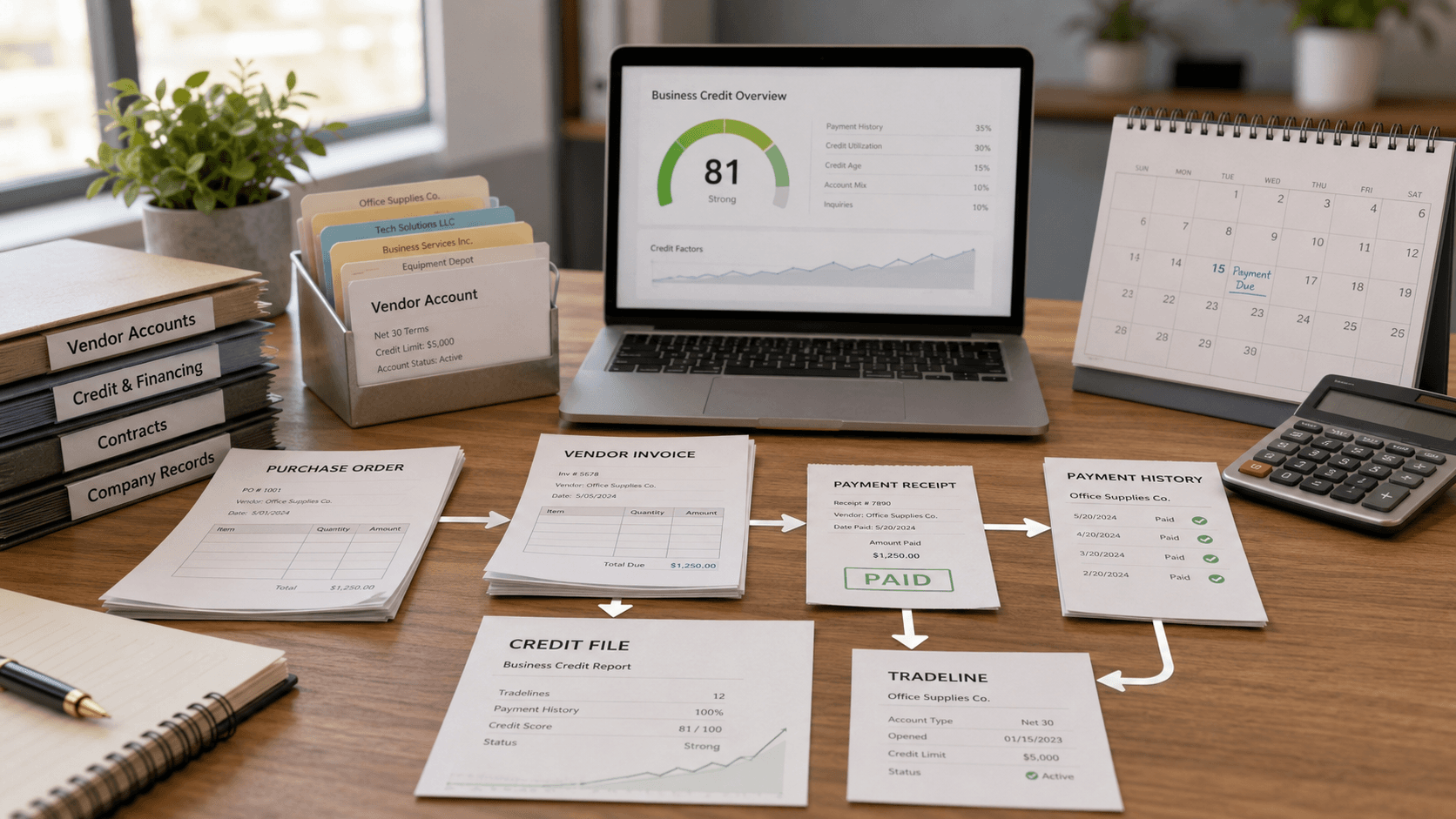
Business tradelines are simply the credit accounts that appear on your company's credit reports. Every time a lender, supplier, or credit card issuer reports your account activity to a business credit bureau, that tradeline shapes how creditworthy your business looks to future lenders, vendors, and partners.
For small business owners who want to access financing, negotiate better payment terms, or separate personal and business credit, understanding how tradelines work is a practical first step. This guide covers what business tradelines are, the different types available, and how to use them to build a strong credit profile. If you are just getting started, our guide on how to build business credit from scratch is a helpful companion resource.
What Are Business Tradelines?
A business tradeline is any credit account that gets reported to one or more business credit bureaus. The three major business credit bureaus are Dun & Bradstreet, Experian Business, and Equifax Business.
Each tradeline entry on your report typically includes:
- Creditor name (the company extending credit)
- Credit limit or loan amount
- Current balance
- Payment history (on time, late, or delinquent)
- Account status (open, closed, in collections)
This is similar to how personal tradelines work on your personal credit report, but business tradelines are tied to your company's EIN rather than your Social Security number. Building a separate set of business tradelines is one of the most effective ways to establish your company as an independent credit entity. For a deeper look at how scores are calculated from this data, see our business credit score guide.
Types of Business Tradelines
Not all tradelines are created equal. Here are the main categories you should know about.
Vendor Tradelines (Net 30/60/90 Accounts)
Vendor tradelines are trade credit accounts extended by suppliers. When a supplier gives you Net 30, Net 60, or Net 90 payment terms, they are essentially lending you short-term credit to purchase goods or services.
These accounts are often the easiest entry point for new businesses because many vendors will extend trade credit without a lengthy underwriting process. The key detail: not all vendors report payment activity to business credit bureaus. Before you open an account specifically to build credit, confirm that the vendor reports to at least one of the major bureaus.
For a list of vendors that report, check out our post on Net 30 accounts that build business credit.
Financial Tradelines
Financial tradelines include business credit cards, lines of credit, term loans, and SBA loans. These accounts tend to carry more weight on your credit report because they involve formal underwriting, meaning the creditor evaluated your business's financial health before extending credit.
A business line of credit is a common financial tradeline that provides ongoing access to funds while building your credit history with each billing cycle. Term loans and SBA loans also add strong tradelines to your profile. You can learn more about SBA options in our SBA loans guide.
Lease and Service Tradelines
Equipment leases, office leases, and telecom accounts can also appear as tradelines on your business credit report. However, reporting is less consistent with these account types. Some providers report automatically, while others only report if the account goes to collections, which means you only get the negative side.
If you are considering equipment financing, ask the financing company whether they report to business credit bureaus. A lease that reports positive payment history adds another tradeline to your profile and diversifies your account mix.
How Business Tradelines Build Credit
Understanding the mechanics helps you make smarter decisions. Here is how tradelines translate into a stronger credit profile:
-
Account reported to bureaus. Once a creditor or vendor reports your account, it appears on your business credit report. This is the foundation.
-
On-time payments accumulate. Every payment you make on time adds to your positive payment history. The Dun & Bradstreet Paydex score, for example, is heavily weighted toward payment timeliness. Paying early can push your Paydex higher.
-
Credit utilization stays low. If you have a credit line of $10,000 and consistently carry a $2,000 balance, your utilization ratio is 20%. Lower utilization signals responsible credit management.
-
Age of tradelines increases. Older accounts demonstrate stability. The longer a tradeline has been open and in good standing, the more it helps your profile.
-
Mix of tradeline types strengthens the profile. Bureaus and scoring models like Experian's Intelliscore look favorably on businesses that manage multiple types of credit successfully. A mix of vendor accounts, credit cards, and loans paints a more complete picture.
None of these factors work in isolation. A strong business credit profile is the result of multiple tradelines, managed well, over time.
Steps to Add Tradelines to Your Business Credit Profile
Here is a practical roadmap for building your tradeline history:
-
Get a DUNS number. Dun & Bradstreet assigns a unique identifier to your business, and many lenders reference it during underwriting. Learn how to get a DUNS number if you do not already have one.
-
Open a business bank account and register your EIN. Keeping business finances separate from personal finances is essential for establishing your company as a distinct credit entity.
-
Start with vendor tradelines that report to bureaus. Open two or three Net 30 accounts that build business credit, make purchases, and pay on time or early.
-
Apply for a small business credit card or line of credit. Once you have a few vendor tradelines reporting, you may qualify for a business credit card or a small business line of credit. These financial tradelines add depth to your profile.
-
Pay every account on time or early. This is the single most important habit. Late payments can significantly damage your scores.
-
Monitor your business credit reports regularly. Check your reports with all three bureaus to verify that accounts are being reported accurately. Our guide on how to check your business credit score walks you through the process.
Building credit takes time. There are no shortcuts, and any service that promises instant results should be approached with caution.
Vendor Tradelines vs. Buying Tradelines: What to Know
You may have seen companies offering to sell business tradelines or add your business as an authorized user on an established account. This practice is risky for several reasons:
- Business credit bureaus can flag or remove tradelines that appear to be purchased rather than earned through genuine business activity.
- Some tradeline-selling schemes cross into fraud territory, which could create legal issues for your business.
- Purchased tradelines often get removed during bureau audits, leaving you back where you started.
The more reliable path is building credit organically through vendor accounts and responsible borrowing. It takes longer, but the results are durable and credible to lenders who review your credit file.
How Many Tradelines Do You Need?
Dun & Bradstreet typically requires at least three reporting tradelines to generate a Paydex score. However, more tradelines with diverse account types and longer payment history will strengthen your profile further.
A practical starting target:
- 3 to 5 vendor tradelines reporting to at least one bureau
- 1 to 2 financial tradelines such as a business credit card or line of credit
- Consistent on-time payments across all accounts for at least 6 to 12 months
As your business grows and qualifies for larger credit products, each new account adds another layer to your credit profile.
Common Mistakes That Hurt Your Tradeline Strategy
Avoid these pitfalls as you build your business credit:
- Late payments. Even one late payment can drop your Paydex score significantly. Set up reminders or autopay to stay on track.
- Opening accounts that do not report. If a vendor or lender does not report to business credit bureaus, the account does nothing for your credit profile. Always verify reporting before opening an account for credit-building purposes.
- Maxing out credit lines. High utilization signals financial stress to scoring models. Try to keep utilization below 30%.
- Ignoring errors on your credit report. Mistakes happen. Review your reports periodically and dispute inaccuracies. Our guide on how to fix and repair business credit covers this process.
- Not separating personal and business credit. Mixing personal and business finances makes it harder to build a standalone business credit profile and can expose your personal credit to business liabilities.
How Strong Tradelines Help You Access Financing
When you apply for a business loan or line of credit, lenders typically review your business credit report as part of their underwriting process. A strong tradeline history can work in your favor by:
- Demonstrating a pattern of responsible credit management
- Showing that your business has established relationships with multiple creditors
- Providing data points that scoring models use to assess risk
Businesses with solid credit profiles may find it easier to qualify for products like SBA loans, term loans, and lines of credit. They may also receive more favorable terms compared to businesses with thin or negative credit files. For more on what lenders look for, see our post on the credit score needed for a business loan.
BreadRoute is a marketplace that helps small business owners compare financing options from multiple lenders. Whether you are looking for your first line of credit or ready to take on growth capital, having strong tradelines on your business credit report puts you in a better position.
Next Steps
Ready to explore financing options for your business? Browse Lenders on BreadRoute to compare offers from multiple lending partners and find options that fit your business needs.
This article provides general information and should not be considered financial or insurance advice.
Frequently Asked Questions
Business tradelines are credit accounts that appear on your company's credit report with one or more business credit bureaus. They include vendor accounts, business credit cards, loans, leases, and other credit relationships. Each tradeline records details like your payment history, credit limit, balance, and account status.
Dun & Bradstreet generally requires at least three tradelines reporting to generate a Paydex score. Other bureaus may generate scores with fewer tradelines, but having at least three to five active, reporting accounts gives you a solid foundation.
No. Many vendors and suppliers do not report payment activity to business credit bureaus. Before opening an account for credit-building purposes, ask the vendor which bureaus they report to. If they do not report, the account will not contribute to your business credit profile.
There is no fixed timeline, but most business owners start seeing their credit profiles take shape after three to six months of consistent, on-time payments across multiple reporting tradelines. Building a strong profile with aged accounts and diverse tradeline types takes a year or more.
The legality varies, but purchasing tradelines is risky regardless. Business credit bureaus can flag or remove purchased tradelines, and some schemes may constitute fraud. The safer and more effective approach is building tradelines organically through vendor accounts and responsible borrowing.
A vendor tradeline comes from a supplier offering trade credit, such as Net 30 payment terms on inventory or supplies. A financial tradeline comes from a formal lending relationship, such as a business credit card, line of credit, or term loan. Financial tradelines typically carry more weight because they involve formal underwriting.
Yes. Many vendor tradelines do not require a personal credit check. Starting with Net 30 vendor accounts that report to business credit bureaus allows you to build a business credit profile independently. Over time, a strong business credit history can help you qualify for financial tradelines even if your personal credit is less than ideal.
The three major business credit bureaus are Dun & Bradstreet, Experian Business, and Equifax Business. Each bureau maintains its own database and scoring models. Not every creditor reports to all three, so it is worth monitoring your reports across multiple bureaus to get a complete picture of your business credit profile.